ANSI EIA-364-32C is a thermal shock test procedure written for electrical connectors, sockets and electromechanical components. It defines test conditions, a procedure and evaluation methods to determine whether a component keeps its electrical and mechanical performance after repeated exposure to extreme temperature changes.
What the standard covers
General environmental standards cover a wide range of products. EIA-364-32C is narrower: it addresses connectors and sockets, where thermal stress affects contact resistance, insulation performance, mechanical integrity and long-term connection reliability. It is used by automotive electronics, EV, aerospace, semiconductor equipment and other high-reliability connector programmes.
What thermal stress does
Rapid temperature changes create stress through:
- Different thermal expansion rates between materials
- Mechanical stress on connector structures
- Changes in contact pressure
- Increases in electrical resistance
- Insulation or sealing degradation
The test verifies whether a connector maintains stable performance after repeated cycling.
Evaluation items
- Contact resistance stability
- Dielectric strength performance
- Insulation resistance
- Physical damage inspection
- Mechanical reliability after temperature exposure
Test principle
The connector is exposed to alternating high and low temperature environments, and performance is evaluated after the thermal stress. A typical run follows this order:
- Initial inspection and measurement – the sample is inspected and baseline electrical measurements are recorded.
- High temperature exposure – the sample is held in a controlled high-temperature environment for the specified duration.
- Low temperature exposure – the sample is transferred to a low-temperature environment, creating the thermal shock stress.
- Temperature cycling repetition – the high/low sequence is repeated for the defined number of cycles.
- Final performance evaluation – electrical and mechanical characteristics are re-measured against the requirement.
Test conditions
| Parameter | Requirement |
|---|---|
| Temperature extremes | High / low temperature exposure |
| Cycle number | 5, 25, 50 or 100 cycles |
| Transfer method | Hot and cold chamber transfer |
| Sample | Connector or socket assemblies |
Applications
Automotive electronics – engine compartment temperature changes, battery system temperature variations and outdoor conditions act on the many connectors in a vehicle.
Aerospace and defence – avionics systems, communication equipment and mission-critical electronics require connectors that hold up under severe conditions.
Semiconductor and electronic equipment – thermal shock identifies failures from material expansion mismatch, contact degradation and thermal fatigue.
How it compares
| Standard | Main application | Testing focus |
|---|---|---|
| ANSI EIA-364-32C | Electrical connectors and sockets | Connector thermal shock reliability |
| IEC 60068-2-14 | General products and components | Temperature change resistance |
| MIL-STD-810H Method 503 | Military equipment and assemblies | Functional and structural reliability after sudden temperature change |
EIA-364-32C is selected when the object is connector performance; IEC 60068-2-14 is used for broader environmental qualification, and MIL-STD-810H Method 503 for military equipment and assemblies.
Chamber requirements
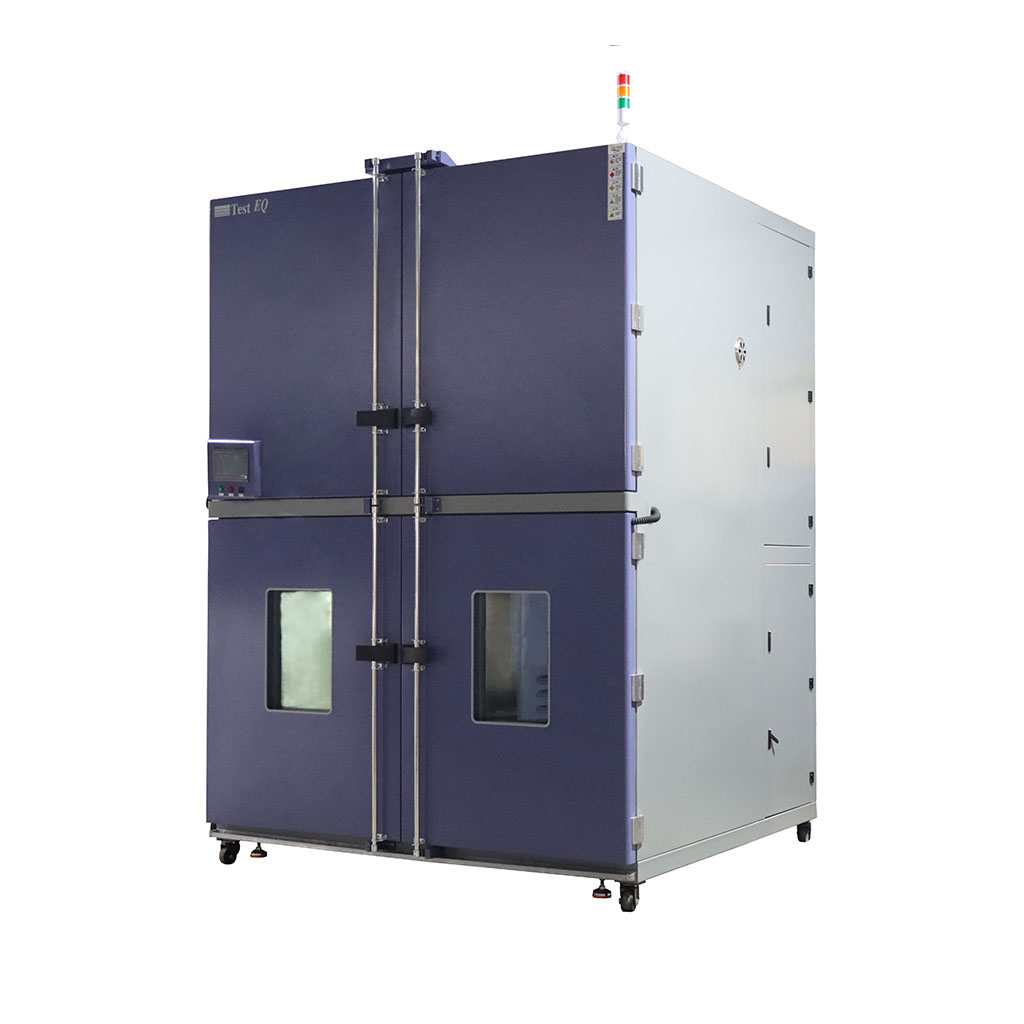
A chamber for EIA-364-32C has to provide:
- A wide temperature range covering both exposure conditions.
- Fast transfer between the hot and cold zones to generate the thermal stress.
- Stable temperature control for repeatable results.
- Long-term reliability, because connector qualification can require many cycles.
Which chamber
- Hot/cold transfer for connector thermal shock → thermal shock chamber .
- Continuous ramp rather than transfer → rapid temperature change chamber .
- Humidity combined with connector evaluation → temperature humidity test chamber .
For the related connector humidity procedure, see EIA-364-17 humidity testing . Contact us with the cycle number, temperature extremes and connector type.
Frequently asked questions
What is ANSI EIA-364-32C used for?
It is a thermal shock test procedure written for electrical connectors, sockets and electromechanical components. It defines test conditions, a procedure and evaluation methods to determine whether a component keeps its electrical and mechanical performance after repeated exposure to extreme temperature changes, and it is used by automotive electronics, EV, aerospace and semiconductor programmes.
How many thermal shock cycles does EIA-364-32C specify?
The cycle number is given as 5, 25, 50 or 100 cycles. The high/low sequence is repeated for the defined number of cycles, and the transfer method is hot and cold chamber transfer.
What items are evaluated after a connector thermal shock test?
Evaluation items are contact resistance stability, dielectric strength performance, insulation resistance, physical damage inspection, and mechanical reliability after temperature exposure. After the final cycle the electrical and mechanical characteristics are re-measured against the requirement.
How does EIA-364-32C differ from IEC 60068-2-14 and MIL-STD-810H Method 503?
EIA-364-32C is selected when the object is connector performance, focusing on connector thermal shock reliability. IEC 60068-2-14 is used for broader environmental qualification of general products and components, and MIL-STD-810H Method 503 for the functional and structural reliability of military equipment and assemblies after sudden temperature change.
What does a chamber need to run EIA-364-32C?
It needs a wide temperature range covering both exposure conditions, fast transfer between the hot and cold zones to generate the thermal stress, stable temperature control for repeatable results, and long-term reliability because connector qualification can require many cycles. For hot/cold transfer a thermal shock chamber is used; for continuous ramp rather than transfer, a rapid temperature change chamber is used instead.