Selecting Environmental Test Chambers: Standards and Trends
Environmental test chambers are the backbone of reliability engineering. Whether you are qualifying a satellite component, a battery pack, or a semiconductor package, the chamber you choose determines how faithfully your laboratory can reproduce the stresses a product will meet in the field. This article walks through the working principles, the standards that govern testing, and the practical selection criteria that matter most.
What an Environmental Test Chamber Actually Does
At its core, a chamber controls temperature, and often humidity, pressure, or vibration, inside a sealed workspace. Heating is typically resistive; cooling relies on mechanical refrigeration cycles, sometimes cascaded to reach very low temperatures. Air is circulated by fans through a plenum to keep gradients small across the working volume.
Key performance parameters to compare:
- Temperature range — common industrial spans run from about -75 °C to +200 °C. Wider is not automatically better; it costs more and may slow ramp rates.
- Temperature uniformity and fluctuation — usually expressed as ± values across the workspace. Tight uniformity matters for multi-sample testing.
- Ramp rate — linear °C/min, measured with or without a live load. A chamber rated at 15 °C/min empty may deliver far less with a heavy fixture inside.
- Humidity range — typically 10 %RH to 98 %RH, constrained by the dew point at low temperatures.
- Recovery time — how fast the chamber returns to setpoint after the door is opened.
Matching Chamber Type to Test Objective
Different reliability questions call for different chamber architectures.
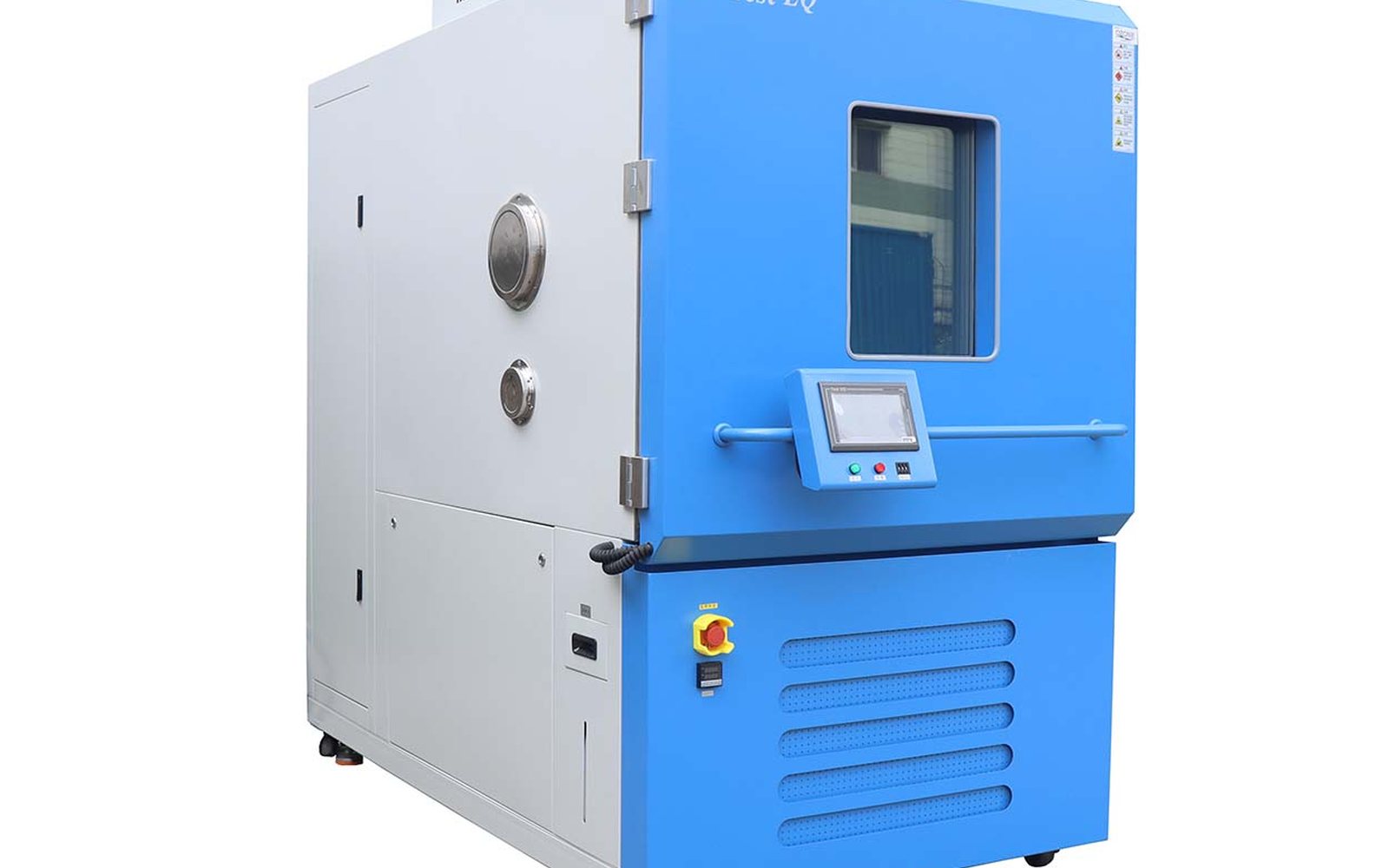
High-low temperature (humidity) chambers are general-purpose workhorses for steady-state and cyclic temperature/humidity testing. They suit IEC 60068-2-1, -2, -30 and -78 style programs.
Rapid temperature change chambers push higher ramp rates, often 5–15 °C/min, to accelerate fatigue damage in solder joints and interconnects. These are common for ESS (Environmental Stress Screening) and for automotive electronics qualification.
Thermal shock chambers move the device under test between two independently controlled zones, either by a moving basket or by a damper that switches airflow. The transition is nearly instantaneous compared with a single-zone ramp, which produces a different failure mode — think IEC 60068-2-14 Na/Nb.
Combined temperature-humidity-vibration (three-axis) chambers integrate an electrodynamic shaker with a climatic workspace, reproducing the simultaneous stresses described in standards such as MIL-STD-810 and various GJB documents.
Altitude and thermal vacuum chambers reduce pressure to simulate high-altitude or space conditions. Thermal vacuum adds radiative heat transfer under vacuum, which is essential for spacecraft hardware.
HALT/HASS chambers are built for aggressive step-stressing, with fast ramp rates and vibration tables, used to find design margins rather than to pass a fixed specification.
Walk-in and drive-in chambers accommodate full assemblies, battery packs, or vehicles, and are often customized around a specific load and handling method.
Gas corrosion chambers introduce mixed flowing gases to evaluate connector and PCB finishes per standards such as IEC 60068-2-60.
Standards and What They Imply for Hardware
Standards shape chamber requirements more than any brochure specification. A few recurring families:
- IEC 60068 — the broad international base for environmental testing, covering cold, dry heat, damp heat, thermal shock, vibration, and combined tests.
- MIL-STD-810 / MIL-STD-202 — military and aerospace methods, often with tighter tolerances and combined environments.
- GJB — Chinese military standards frequently referenced by domestic aerospace and defense programs.
- JEDEC JESD22 — semiconductor-focused, including temperature cycling and biased humidity tests.
- ASTM and UL — material, component, and safety-oriented methods.
- ISO 9001 — a quality management baseline; it says nothing about chamber performance but signals a controlled manufacturing process.
When reading a test method, extract the tolerance on temperature, the dwell time, the number of cycles, and whether humidity or vibration is applied simultaneously. Those four items define the chamber you need.
Trends Reshaping the Industry
Several directions are visible across the environmental testing field.
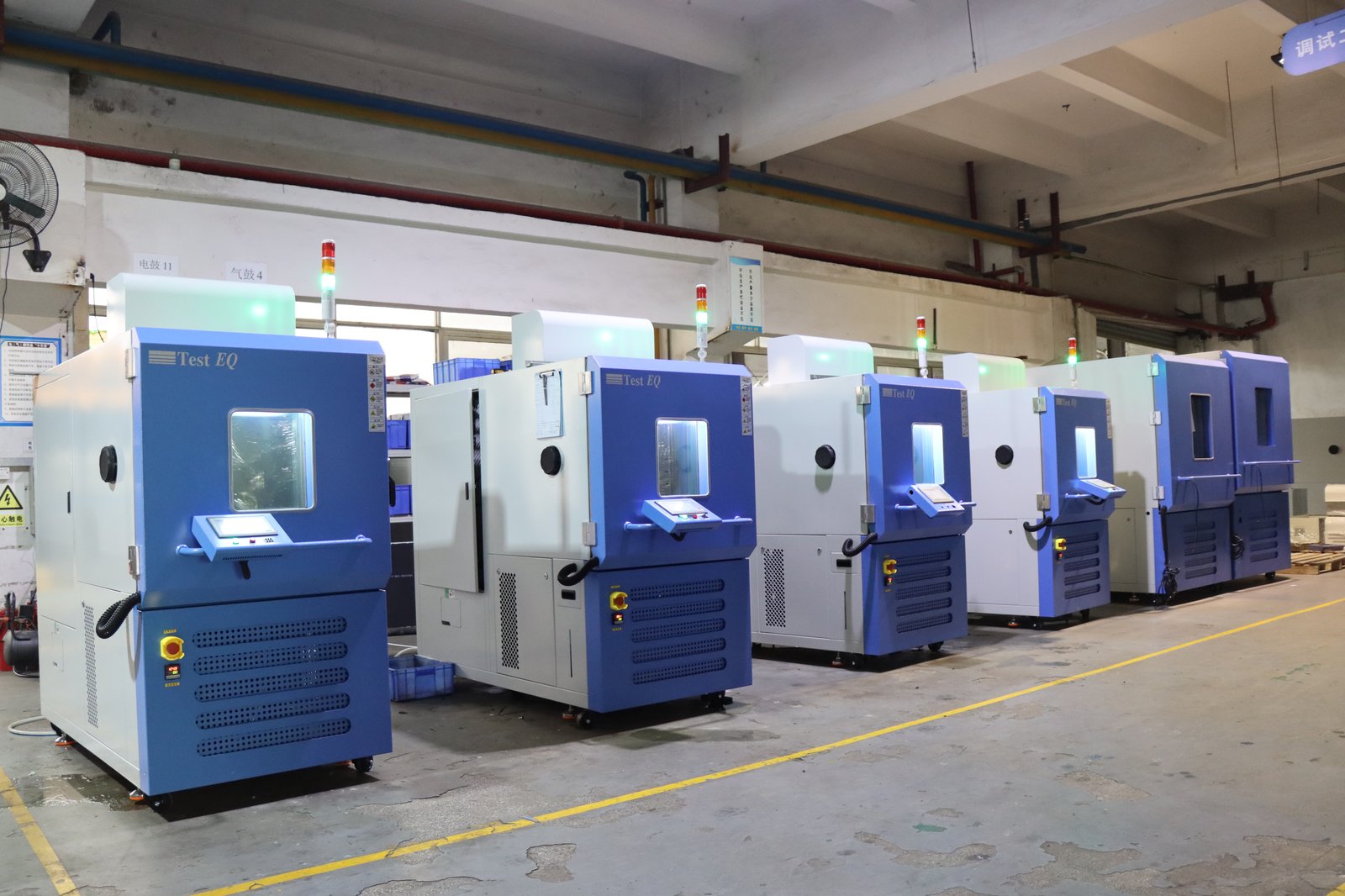
Higher ramp rates with larger loads. Battery packs and power electronics are heavy and thermally massive. Chambers are being engineered with more refrigeration capacity and smarter airflow to hold ramp rates under real load.
Tighter energy efficiency. Cascaded systems and variable-frequency compressors reduce power draw, and heat recovery is increasingly designed in rather than bolted on.
Integrated data and connectivity. Chambers now log temperature, humidity, and vibration continuously and expose that data to laboratory information systems, which simplifies traceability during audits.
Combined-environment testing. Customers increasingly want temperature, humidity, vibration, and sometimes altitude in one run, because sequential testing misses interaction effects.
Wider use of HALT/HASS. Rather than only proving compliance, teams use stress screening earlier in development to expose weak designs before tooling is finalized.
Modular and walk-in designs. Custom footprints, multiple access doors, and pass-through ports let a single chamber serve several programs.
Practical Selection Checklist
Before requesting a quotation, define:
- The applicable standard and the exact test profile.
- The mass, volume, and heat dissipation of the load.
- Required ramp rate with the load installed.
- Workspace dimensions plus clearance for fixtures and cabling.
- Humidity, altitude, or vibration requirements.
- Utility limits — power, cooling water, floor loading, ceiling height.
- Data logging, alarm, and safety requirements, especially for lithium batteries.
Reviewing the technical resources in our /tech/ section can help you map a standard to a chamber configuration, and the /projects/ overview shows the main chamber families and their typical applications. For application-specific questions, /contact/ reaches our engineering offices in Dongguan, Xi’an, Beijing, and Shanghai.
Summary
Choosing an environmental test chamber is a matching exercise: the test standard defines the stress, the load defines the capacity, and the facility defines the constraints. Temperature range and ramp rate are the headline numbers, but uniformity, recovery time, and load-handling capability usually decide whether a chamber performs as expected in daily use. Start from the standard, size for the real load, and confirm the utilities before finalizing the order — that sequence prevents most of the costly surprises in reliability laboratory planning.
Frequently asked questions
What temperature and humidity ranges do environmental test chambers cover?
Common industrial temperature spans run from about -75 °C to +200 °C, and humidity typically from 10 %RH to 98 %RH, constrained by the dew point at low temperatures. A wider temperature range is not automatically better; it costs more and may slow ramp rates.
What ramp rate should I check when selecting a chamber?
Ramp rate is expressed in linear °C/min and is measured with or without a live load. Rapid temperature change chambers often run 5–15 °C/min for ESS and automotive electronics qualification, but a chamber rated at 15 °C/min empty may deliver far less with a heavy fixture inside, so the ramp rate should be defined with the load installed.
How do I choose between a thermal shock chamber and a rapid temperature change chamber?
Thermal shock chambers move the device under test between two independently controlled zones by a moving basket or a damper that switches airflow, giving a transition that is nearly instantaneous compared with a single-zone ramp and producing a different failure mode (think IEC 60068-2-14 Na/Nb). Rapid temperature change chambers push higher ramp rates in a single zone to accelerate fatigue damage in solder joints and interconnects.
What should I define before requesting an environmental chamber quotation?
Define the applicable standard and the exact test profile, the mass, volume and heat dissipation of the load, the required ramp rate with the load installed, workspace dimensions plus clearance for fixtures and cabling, humidity, altitude or vibration requirements, utility limits, and data logging, alarm and safety requirements — especially for lithium batteries.
What trends are reshaping environmental test chamber design?
Higher ramp rates with larger loads such as battery packs and power electronics, tighter energy efficiency through cascaded systems and variable-frequency compressors, integrated data and connectivity to laboratory information systems, combined-environment testing, wider use of HALT/HASS earlier in development, and modular or walk-in designs.