How to Choose an Environmental Test Chamber: A Standards-Based Guide
Choosing an environmental test chamber is a standards exercise before it is a hardware decision. Identify the standard that governs your product, convert it into four numbers — temperature range, ramp rate, humidity tolerance and load capacity — then verify that the manufacturer can demonstrate those figures under load with traceable calibration. Every other selection question follows from those four.
Environmental test chambers are the backbone of product reliability engineering. Whether you are validating a semiconductor package, a battery pack, an automotive ECU, or an aerospace assembly, the chamber you choose determines whether your test results are meaningful — or merely expensive. This guide walks through the technical fundamentals, the standards that govern testing, and the selection criteria that matter most.
Why environmental testing matters
Products rarely fail because of a single catastrophic event. More often, they degrade gradually under the combined stress of temperature cycling, humidity, vibration, and altitude. Accelerated life testing compresses years of field exposure into weeks of laboratory time, exposing latent defects before they reach the customer.
The core logic is simple: apply stress, observe failure, improve design. What makes this rigorous is repeatability. A test is only useful if another engineer, in another lab, can reproduce it. That is why standards exist — and why chamber performance specifications must be traceable and verifiable.
What are the main types of environmental test chambers?
Temperature and humidity chambers cover the widest range of routine testing. A typical specification spans -75°C to +200°C, with humidity control from roughly 10% to 98% RH. These chambers support steady-state conditioning, temperature cycling, and damp heat tests.
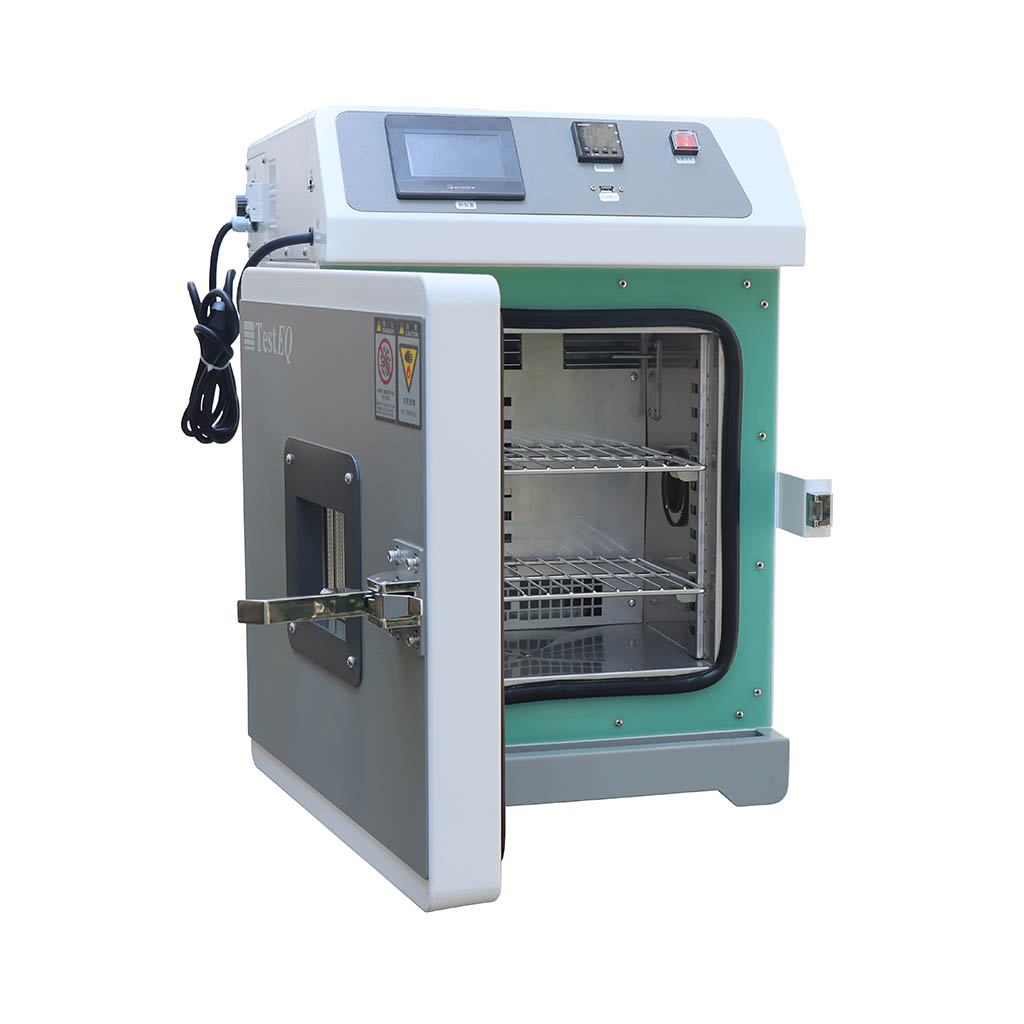
Rapid temperature change chambers (sometimes called ESS chambers) drive transitions at rates such as 5, 10, or 15°C per minute, and up to 30°C/min in higher-rate configurations. Faster ramp rates mean shorter test cycles, but they also demand more from the refrigeration system and the control algorithm.
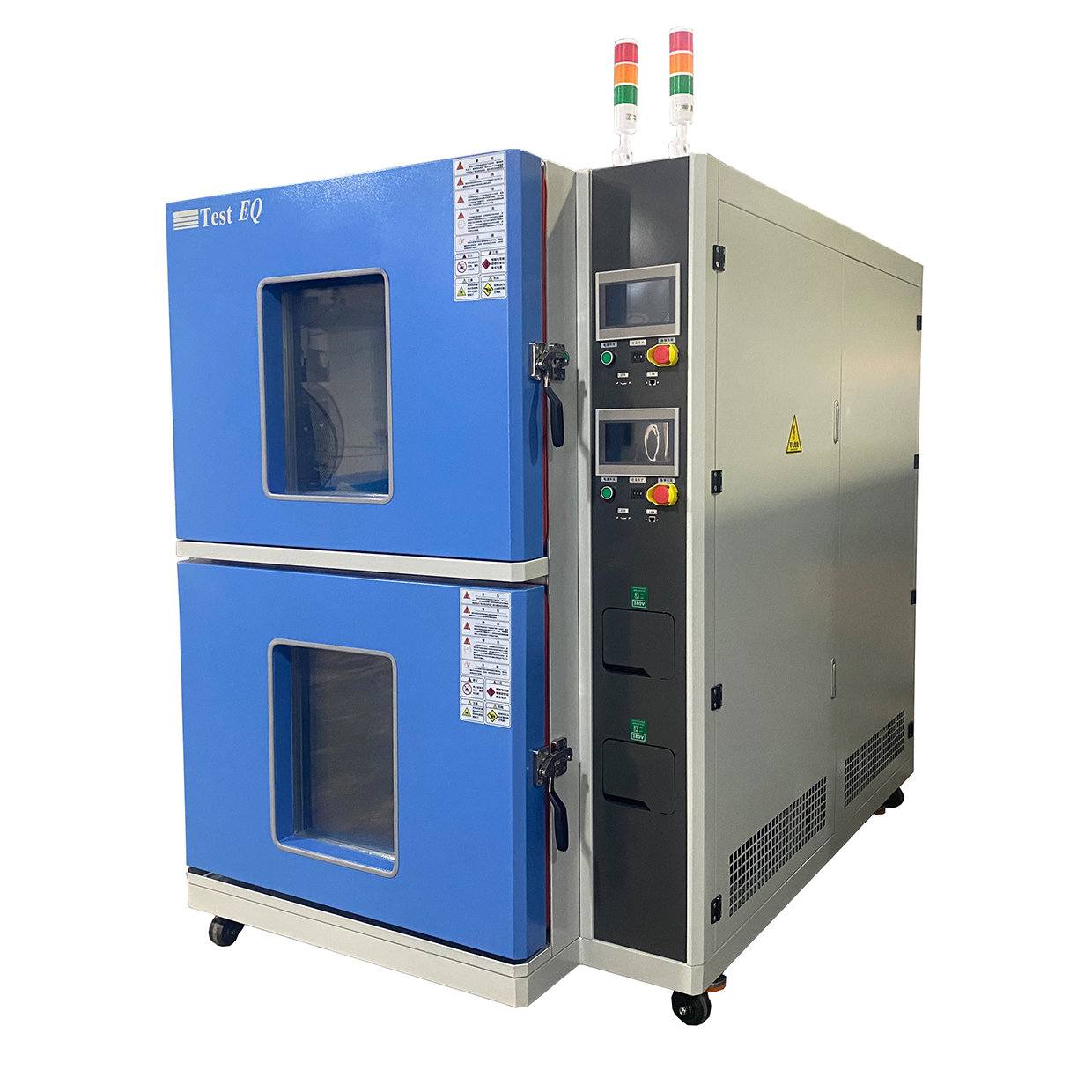
Thermal shock chambers take a different approach: a basket or lift mechanism moves the specimen between two independently controlled zones — typically hot and cold — in seconds rather than minutes. This produces a far more aggressive stress profile than a single-zone ramp.
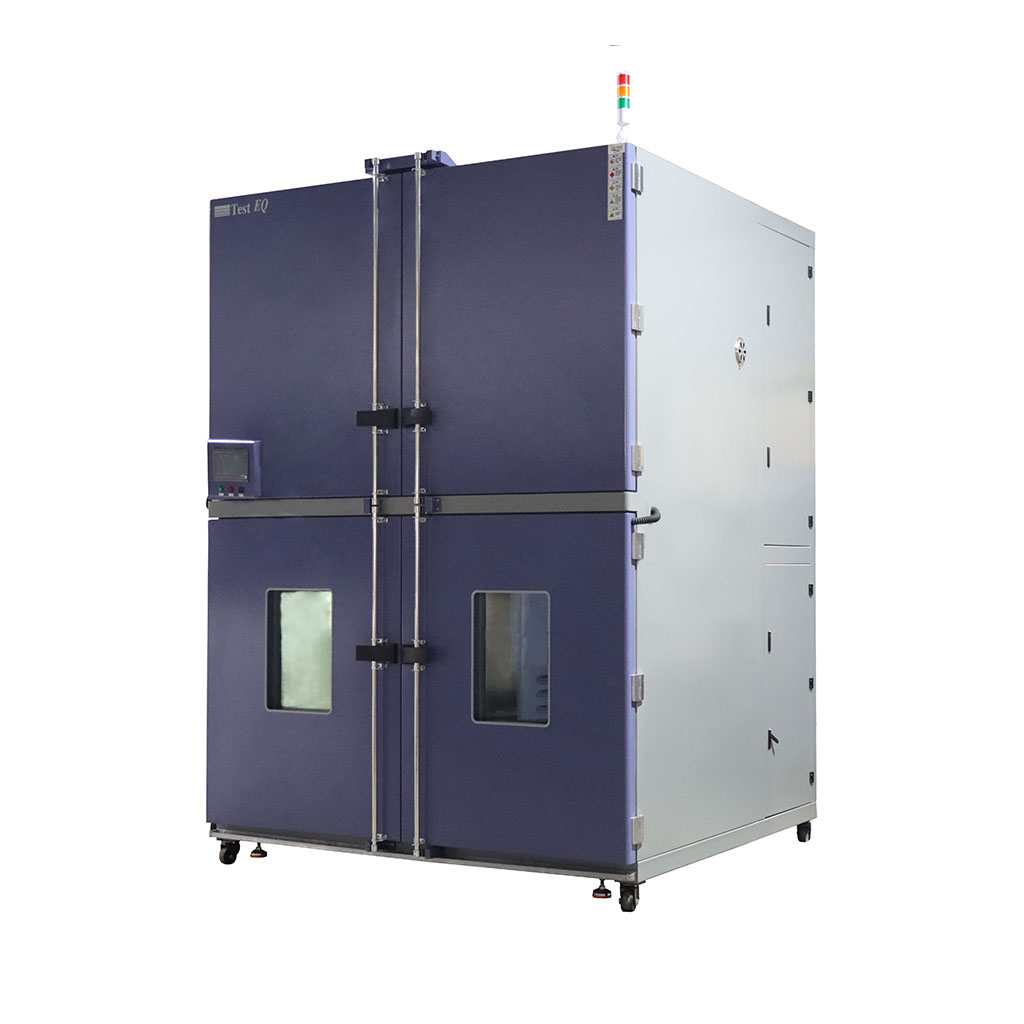
Altitude and low-pressure chambers simulate reduced atmospheric pressure, which affects dielectric strength, cooling efficiency, and outgassing behavior. Combined temperature-humidity-altitude chambers add further realism for avionics and aerospace work.
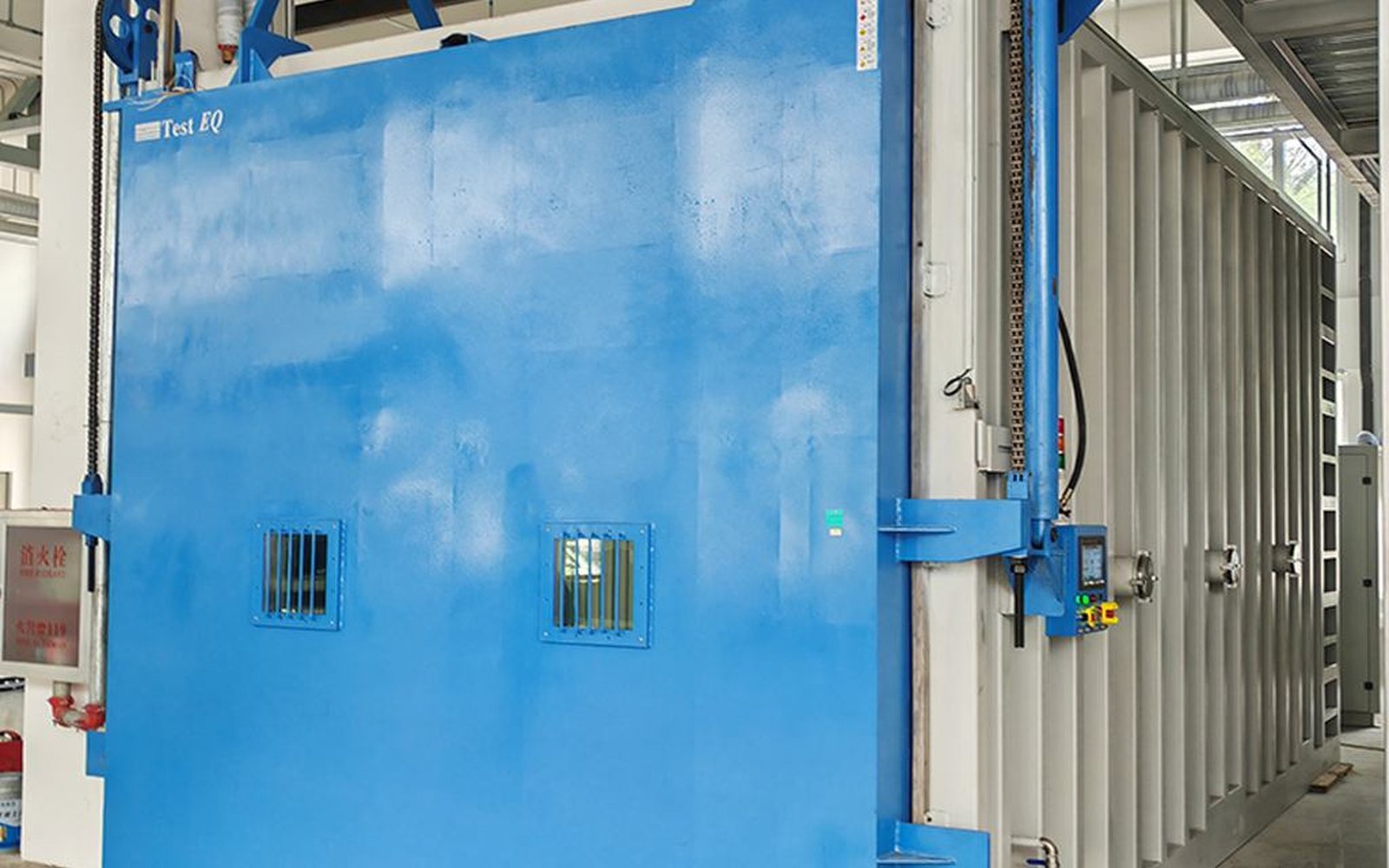
Thermal vacuum chambers serve space applications, where convection is absent and heat transfer occurs almost entirely by radiation and conduction.
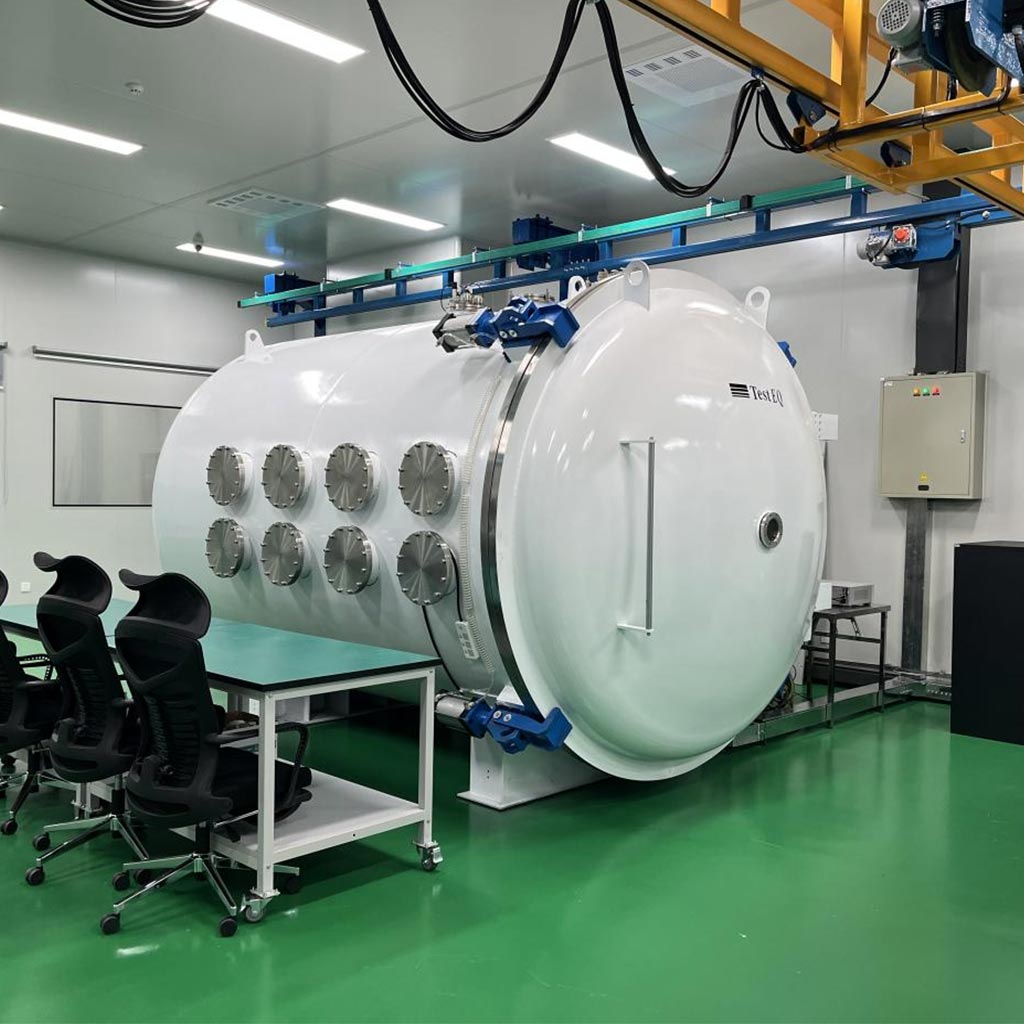
HALT and HASS chambers are designed for margin discovery and production screening. HALT pushes a product beyond its specification until it fails, revealing design weaknesses. HASS applies a proven stress profile to every unit on the line.
Walk-in and drive-in chambers handle large assemblies — full vehicles, server racks, or battery modules — where a benchtop unit is simply too small.
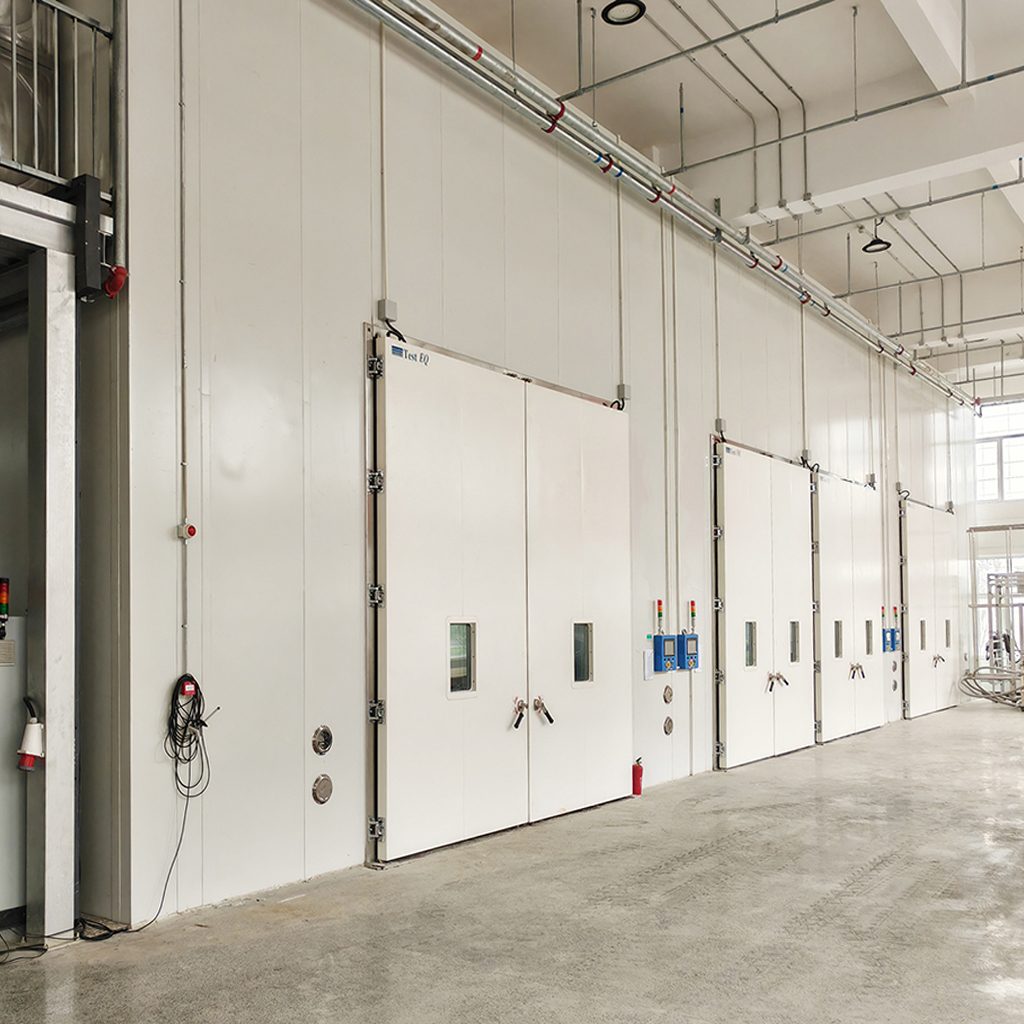
Corrosive gas and standard climate chambers round out the portfolio, addressing mixed flowing gas exposure and reference-condition testing respectively.
The table below summarises how the main families differ, which is usually the first question a test engineer needs to settle.
| Chamber type | How the stress is applied | Typical duty | Governing standards |
|---|---|---|---|
| Temperature and humidity | Controlled air temperature and humidity in one space | Steady-state conditioning, damp heat, temperature cycling | IEC 60068-2-1, IEC 60068-2-2, IEC 60068-2-30, IEC 60068-2-78 |
| Rapid temperature change | Controlled air ramp rate in one space, 5 to 30°C/min | ESS screening, accelerated cycling | IEC 60068-3-5, JEDEC JESD22-A104 |
| Thermal shock | Specimen transferred between hot and cold zones | Solder joint, coating and package integrity | IEC 60068-2-14, MIL-STD-810 Method 503 |
| Altitude and low pressure | Reduced atmospheric pressure, optionally with temperature and humidity | Avionics, dielectric and outgassing behaviour | IEC 60068-2-13, MIL-STD-810 Method 500 |
| Thermal vacuum | Low pressure with radiative heat transfer | Space and satellite hardware | Space agency and MIL-STD programmes |
| Walk-in and drive-in | Full-size conditioned room | Vehicles, server racks, battery modules | Application and customer specification |
Which standards govern environmental testing?
The standard you test to shapes the chamber specification. Common frameworks include:
- IEC 60068 — the foundational international series for environmental testing, covering cold, dry heat, damp heat, thermal shock, and vibration.
- MIL-STD-810 — U.S. military methods for environmental engineering, widely referenced in aerospace and defense supply chains.
- GJB — Chinese national military standards, frequently applied in domestic aerospace and defense programs.
- JEDEC JESD22 — semiconductor-specific test methods, including temperature cycling and biased humidity.
- ASTM and UL — material and safety-oriented test protocols.
- ISO 9001 — not a test method, but the quality management framework that governs how a manufacturer builds and calibrates its equipment.
Before specifying a chamber, confirm which standard governs your product. The required temperature range, ramp rate, dwell time, and humidity tolerance all follow from that choice.
How do you specify temperature range and uniformity?
A wide range is useful, but uniformity across the working volume is what makes results defensible. Ask for the measured uniformity at the extremes, not just at ambient. The number that matters is the one quoted together with the sensor positions and the load, because uniformity always degrades as the load fills the working volume.
What ramp rate should you specify under load?
A chamber rated at 15°C/min empty may perform very differently with a 50 kg thermal mass inside, because the load itself must be heated and cooled. Specify the rate with a representative load and at the extremes you will actually run. If the profile is defined on product surface temperature rather than air temperature, say so at the enquiry stage — it changes the control strategy and the refrigeration sizing.
How should humidity control be specified?
Steam injection, wet-bulb, and capacitive sensor approaches differ in stability and maintenance burden. For long damp heat runs, stability matters more than peak capability. Ask how humidity is measured at low temperatures, and how the chamber avoids condensation on the specimen when the profile passes through the dew point.
Which refrigeration architecture do you need?
Single-stage, cascade, and cascade with economizer designs trade off cost, low-temperature reach, and energy consumption. A cascade system is generally required below roughly -40°C. The choice is driven by the lowest temperature in the profile, the rate at which you must reach it, and the heat the specimen itself dissipates while powered.
What else affects total cost of ownership?
Control system and data logging. Modern chambers should offer programmable profiles, alarm history, and exportable data. Traceability is not optional in regulated industries.
Service and calibration. A chamber is a long-term asset. Calibration intervals, sensor replacement, and local service response time affect total cost of ownership far more than purchase price.
For a closer look at available configurations, browse the product range or review the technical notes for application-specific guidance.
How do chambers map to industries?
Aerospace relies on altitude, thermal vacuum, and combined temperature-vibration testing. Automotive programs emphasize thermal shock for electronics and humidity cycling for connectors and seals. Semiconductor qualification centers on JEDEC-style temperature cycling and biased humidity. Power battery testing combines temperature cycling with safety-oriented abuse conditions. Electronics and research labs typically need flexible, mid-range chambers with good documentation.
| Industry | Primary test focus | Chamber families |
|---|---|---|
| Aerospace and defence | Altitude, thermal vacuum, combined temperature-vibration | Altitude, thermal vacuum, temperature-humidity-vibration |
| Automotive | Thermal shock for electronics, humidity cycling for connectors and seals | Thermal shock, temperature-humidity, battery test chambers |
| Semiconductor | JEDEC temperature cycling, biased humidity | Temperature-humidity, thermal shock, HAST/PCT |
| Power battery | Temperature cycling with safety-oriented abuse conditions | Battery, thermal shock, rapid temperature change chambers |
| Electronics and research | Flexible mid-range programmes with good documentation | Temperature-humidity, benchtop and custom chambers |
If your requirements span several of these categories, it is worth discussing the test profile before the equipment. Our team can be reached through the contact page .
Summary
Choosing an environmental test chamber is a standards exercise first and a hardware exercise second. Identify the governing standard, translate it into temperature range, ramp rate, humidity tolerance, and load capacity, then verify that the manufacturer can demonstrate those figures with traceable calibration. A chamber that meets the specification on paper but drifts under load will cost far more in retests than it saves at purchase. Get the specification right, and the equipment decision becomes straightforward.
Frequently asked questions
What temperature range should an environmental test chamber cover?
Most test programmes are covered by a working range of -75°C to +200°C, with relative humidity controllable from about 10% to 98% RH. Specify the range you actually need at the extremes of the working volume, and ask for measured uniformity there rather than at ambient only.
What is the difference between a thermal shock chamber and a rapid temperature change chamber?
A thermal shock chamber moves the specimen between two or three independently controlled zones in seconds, so the specimen sees a step change. A rapid temperature change chamber keeps the specimen in one space and drives the air temperature at a defined rate of 5, 10 or 15°C/min, up to 30°C/min. Choose thermal shock for transient failure modes, and rapid temperature change when a controlled surface rate or a long cycling test is required.
How do I decide between an altitude chamber and a thermal vacuum chamber?
An altitude or low-pressure chamber simulates reduced atmospheric pressure for avionics and general low-pressure work, and can be combined with temperature and humidity. A thermal vacuum chamber serves space applications, where the pressure is low enough that convection is absent and heat transfer is almost entirely radiative and conductive.
Which standards are most commonly used for environmental testing?
IEC 60068 is the foundational international series for cold, dry heat, damp heat, thermal shock and vibration. MIL-STD-810 and GJB cover military and aerospace programmes, JEDEC JESD22 covers semiconductor temperature cycling and biased humidity, and ASTM and UL cover material and safety-oriented protocols.
Why does ramp rate have to be specified under load?
A chamber rated at 15°C/min empty can behave very differently with a 50 kg thermal mass inside, because the load itself has to be heated and cooled. Specify the rate with a representative load and at the temperature extremes you will run, otherwise the quoted figure will not be reproduced in production testing.