IEC 60068-2-1 is the cold part of the IEC 60068 series. It defines low-temperature test procedures used to evaluate the performance, reliability and functional stability of components, equipment and materials under cold conditions — whether the product is stored, transported or operated at low temperature.
What the test determines
The test establishes whether a product can operate, survive or be stored at low temperature without degradation or failure. It is applied to automotive electronics (ECU, sensors, battery systems), aerospace and defence systems, semiconductor and PCB assemblies, industrial control systems, and consumer and telecom equipment.
The engineering objectives are to identify brittle fracture risk in materials, evaluate electronic cold-start behaviour, detect solder joint and PCB stress failures, validate lubrication and mechanical system stability, and simulate storage and transport in cold climates.
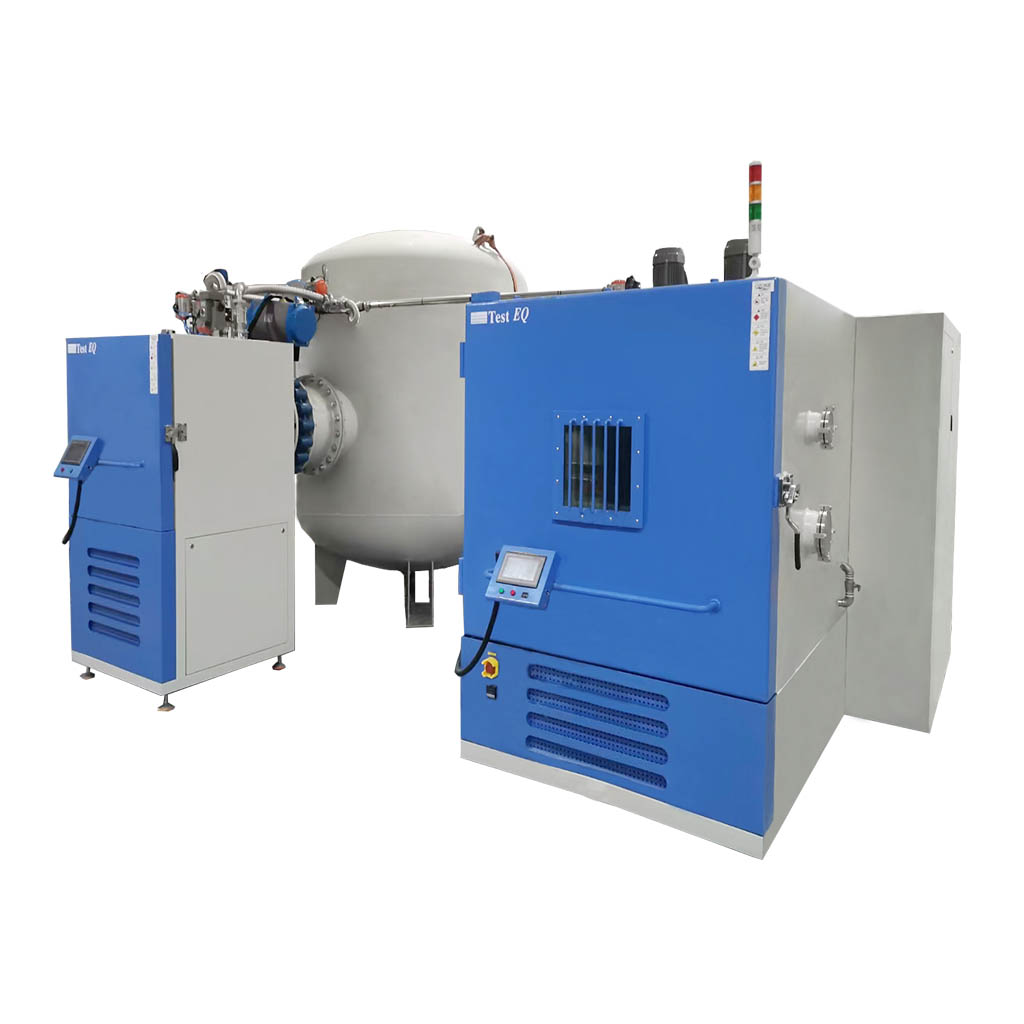
The two test methods
IEC 60068-2-1 defines two main methods.
Test Ab – cold for non-heat-dissipating specimens. The specimen is placed in the chamber at ambient condition, the temperature is gradually reduced to the specified level, and the specimen remains unpowered. Holding time is typically 16 h to 72 h depending on the requirement.
Test Ad – cold for heat-dissipating specimens. The specimen is energised during temperature exposure, which evaluates real operating conditions under cold stress and requires stable thermal compensation in the chamber control system.
General procedure
- Preconditioning at standard atmosphere (23 °C / 50 % RH).
- Placement into the cold chamber.
- Temperature ramp-down to the specification.
- Stabilisation period.
- Exposure duration.
- Recovery at normal conditions.
- Functional verification.
Chamber requirements
To meet IEC 60068-2-1, the chamber has to hold these limits:
- Temperature range – typically −70 °C to +180 °C industrial grade; minimum capability down to −40 °C or lower depending on the application.
- Temperature uniformity – ≤ ±2.0 °C as a typical IEC requirement; advanced laboratories require ±1.0 °C or better.
- Temperature stability – ±0.5 °C to ±1.0 °C during steady state.
- Ramp rate – controlled cooling, not shock unless specified, with linear or step-controlled profiles.
- Airflow – forced convection, arranged to avoid a direct cold jet on the specimen.
- Data logging – multi-channel temperature monitoring and IEC-compliant traceability output.
Failure modes in cold testing
- PCB cracking from thermal contraction mismatch
- Battery capacity drop or internal resistance rise
- LCD display slow response or freeze
- Connector detachment from material shrinkage
- Lubricant solidification in mechanical assemblies
These are used as feedback into design validation and reliability improvement loops.
IEC 60068-2-1 against IEC 60068-2-14
IEC 60068-2-1 is a steady cold exposure. IEC 60068-2-14 extends the work to temperature change, where the product is moved between temperatures and the failure mechanism becomes thermal fatigue rather than a low-temperature limit. The cold chamber and the temperature-change chamber are specified differently, so the method is fixed first.
Which chamber
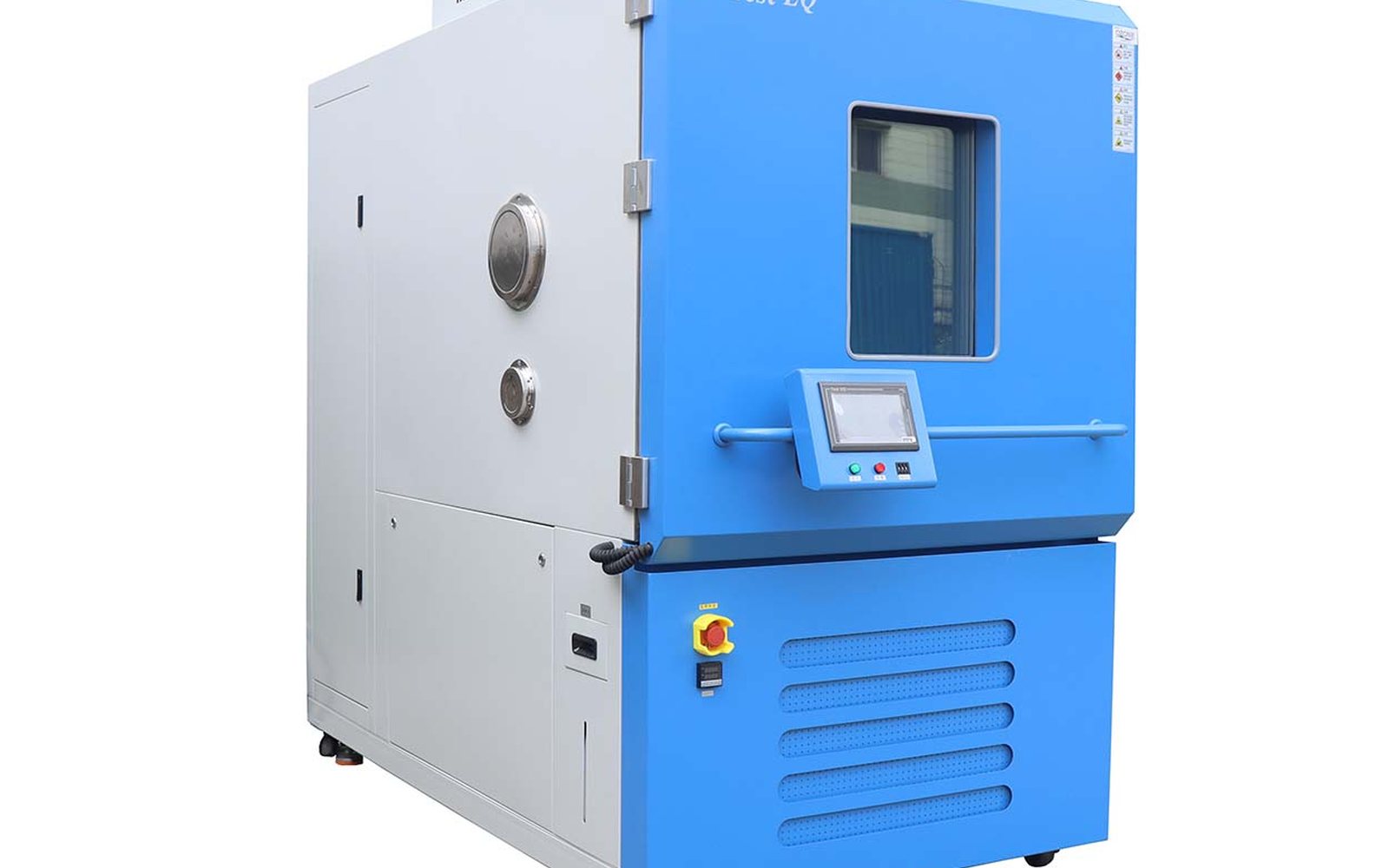
- Basic cold testing at a steady temperature → temperature humidity test chamber for −70 °C to +180 °C, with stable low-temperature control.
- Cold testing that needs rapid cooling or a thermal-shock precondition → rapid temperature change chamber .
- Temperature change testing itself → see the IEC 60068 series overview .
Contact us with the required low temperature, holding time, specimen size and operating or non-operating condition.
Frequently asked questions
What is the difference between Test Ab and Test Ad in IEC 60068-2-1?
Test Ab covers cold for non-heat-dissipating specimens: the specimen is placed in the chamber at ambient condition, the temperature is gradually reduced to the specified level, and it stays unpowered, with holding time typically 16 h to 72 h depending on the requirement. Test Ad covers heat-dissipating specimens that are energised during temperature exposure, which evaluates real operating conditions under cold stress and requires stable thermal compensation in the chamber control system.
What chamber performance limits does IEC 60068-2-1 require?
Temperature range of typically −70 °C to +180 °C industrial grade, with minimum capability down to −40 °C or lower depending on the application. Temperature uniformity of ≤ ±2.0 °C as a typical IEC requirement, with advanced laboratories requiring ±1.0 °C or better, and temperature stability of ±0.5 °C to ±1.0 °C during steady state. Airflow is forced convection arranged to avoid a direct cold jet on the specimen, with multi-channel temperature monitoring and IEC-compliant traceability output.
What does the general cold test procedure look like?
Preconditioning at standard atmosphere (23 °C / 50 % RH), then placement into the cold chamber, temperature ramp-down to the specification, a stabilisation period and the exposure duration. Recovery at normal conditions comes next, followed by functional verification.
How does IEC 60068-2-1 differ from IEC 60068-2-14?
IEC 60068-2-1 is a steady cold exposure, while IEC 60068-2-14 extends the work to temperature change, where the product is moved between temperatures and the failure mechanism becomes thermal fatigue rather than a low-temperature limit. The cold chamber and the temperature-change chamber are specified differently, so fix the method first.
Which failure modes show up in cold testing?
PCB cracking from thermal contraction mismatch, battery capacity drop or internal resistance rise, and LCD display slow response or freeze. Connector detachment from material shrinkage and lubricant solidification in mechanical assemblies are also typical. These results are used as feedback into design validation and reliability improvement loops.