LED luminaires and drivers are rated for outdoor, industrial and humid indoor use, and the rating is proved in an environmental chamber rather than on a datasheet. Moisture and temperature are the stresses that decide long-term light output, colour stability and driver reliability, so lighting qualification centres on two families of tests: damp heat and temperature exposure.
Why moisture matters to an LED product
Moisture enters through seals, interfaces and microscopic pathways in the potting, the lens, the housing and the driver board. Over time it contributes to corrosion, insulation degradation, leakage current, swelling, delamination and light-output decay. For a luminaire the failure rarely appears immediately; it appears as lumen depreciation, colour shift or driver failure after months in service.
Damp heat testing measures that risk in a repeatable way, and it is applied to the LED package, the PCB assembly, the driver electronics, connectors, sealing materials and the finished luminaire.
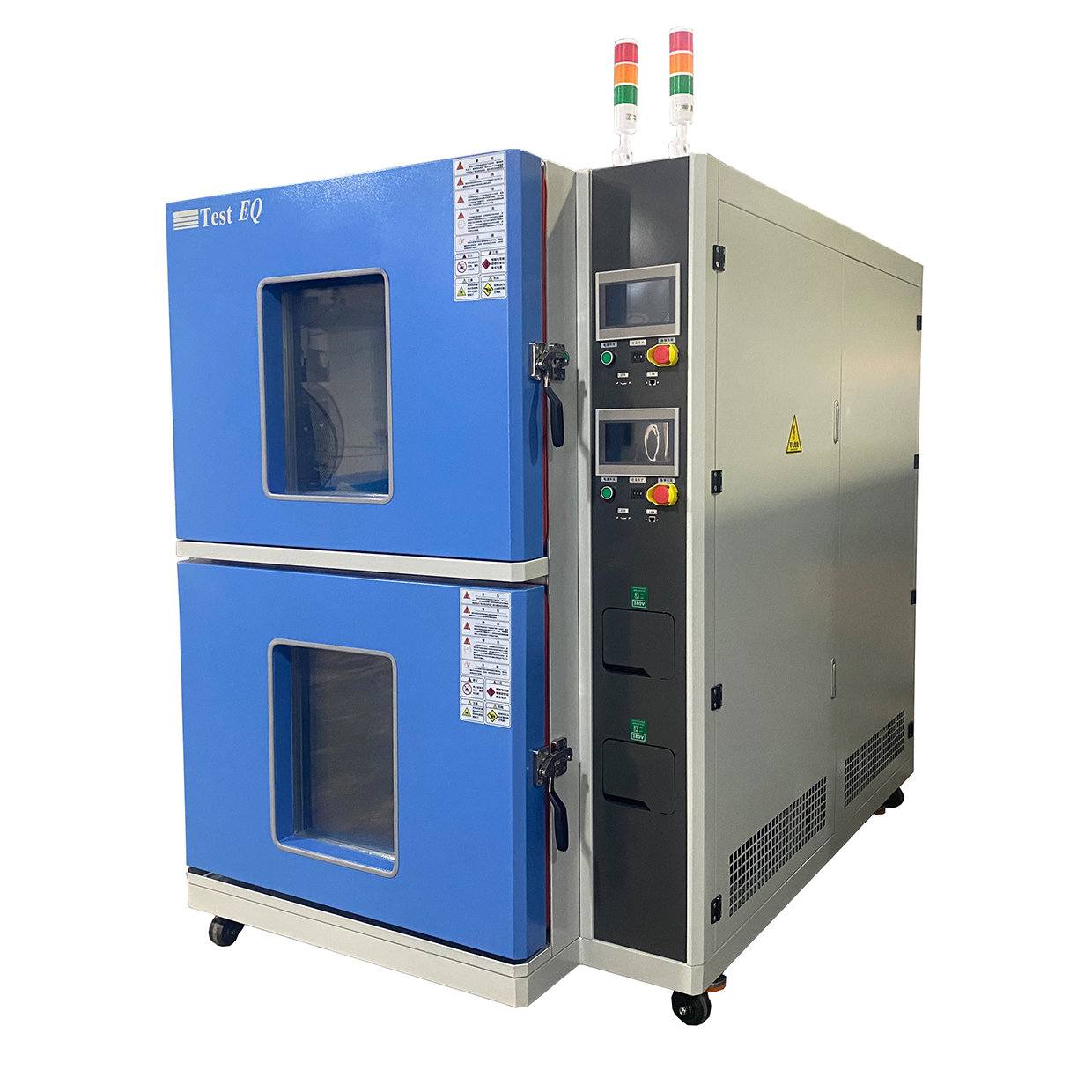
The damp heat methods
Two IEC 60068 methods cover the humidity condition, and they are not interchangeable.
| Feature | IEC 60068-2-78 | IEC 60068-2-30 |
|---|---|---|
| Main focus | Damp heat, steady state | Damp heat, cyclic |
| Temperature profile | Relatively stable temperature | Temperature changes during cycles |
| Humidity exposure | Sustained humidity | Cyclic humidity |
| Condensation effects | Depends on specified conditions | Cyclic conditions may promote condensation |
| Typical purpose | Long-duration moisture resistance | Resistance to cyclic climatic stress |
| Typical equipment | Temperature humidity chamber | Temperature humidity chamber with cyclic control |
A composite method, IEC 60068-2-38, combines temperature and humidity in a defined sequence:
| Feature | IEC 60068-2-78 | IEC 60068-2-38 |
|---|---|---|
| Primary focus | Damp heat, steady state | Composite temperature/humidity testing |
| Environmental profile | Steady high humidity | Combined temperature and humidity sequence |
| Cycling | Not the primary characteristic | Includes defined environmental changes |
| Typical application | Moisture resistance and reliability | Component environmental qualification |
| Chamber requirement | Stable temperature and humidity control | Programmable temperature and humidity profile |
The correct method follows the environment the luminaire is expected to meet and the applicable product specification. A chamber built for basic constant-humidity exposure has different control and programming capability from one used for composite sequences, so the method is fixed before the chamber is specified.
Steady-state damp heat procedure
- Specimen preparation. The luminaire, driver or board is prepared to the product specification, with baseline electrical and functional measurements recorded.
- Chamber stabilisation. The chamber is brought to the specified temperature and relative humidity.
- Damp heat exposure. The specimen stays at the steady-state condition for the required duration, non-operating or operating as specified. The chamber holds the condition without unnecessary fluctuation.
- Recovery. The specimen passes through a defined recovery period before final measurements.
- Final inspection. Items evaluated include electrical performance, insulation resistance, leakage current, corrosion, surface degradation, mechanical performance, functional operation and dimensional changes.
Acceptance criteria follow the product specification, not the environmental method alone.
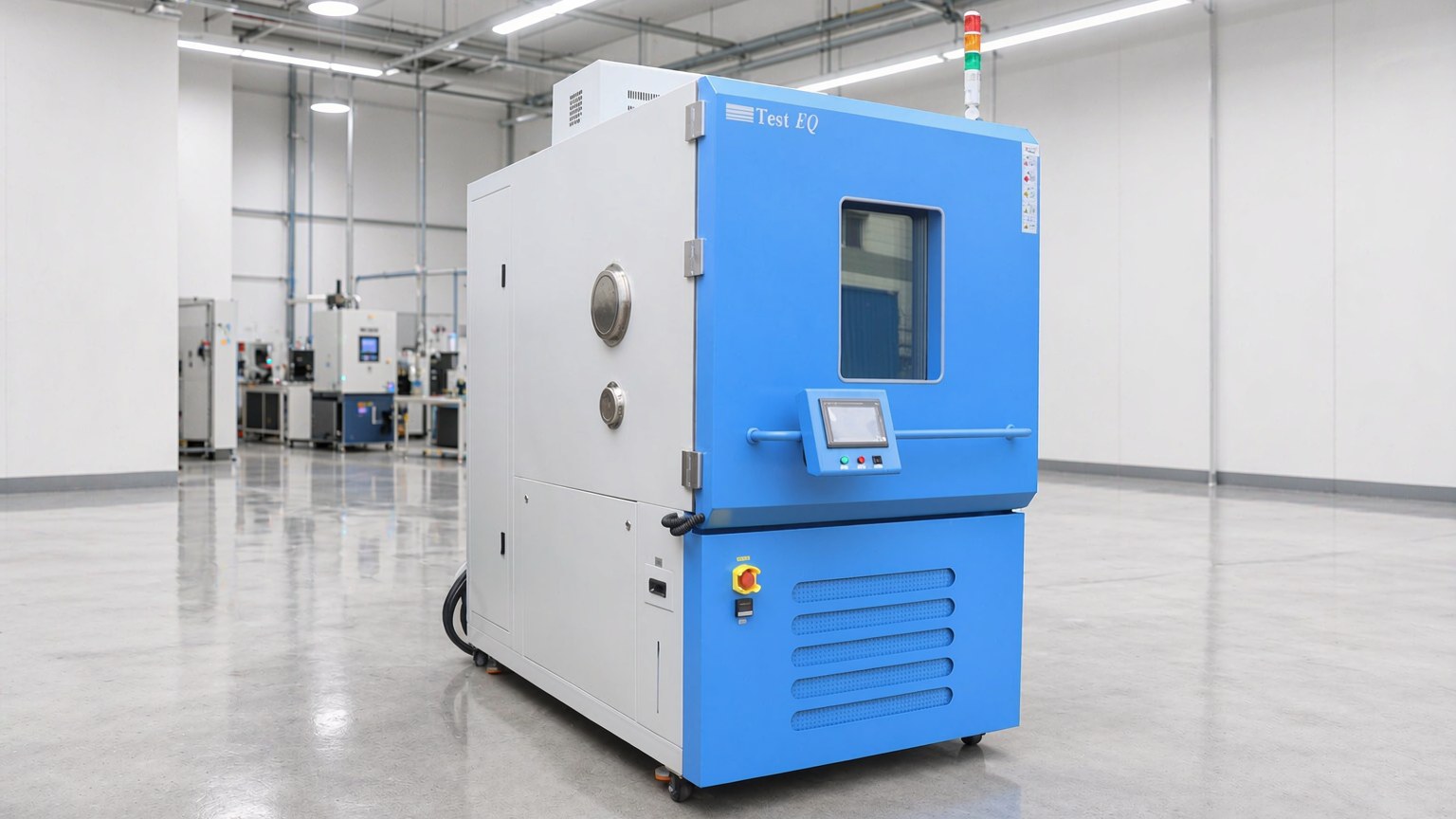
Temperature testing
Alongside moisture, LED products are exposed to high and low temperature and to temperature change. High-temperature exposure checks the driver, the solder joints and the encapsulation; low-temperature exposure checks cold behaviour and material integrity; temperature cycling checks the solder joints and the die-attach under repeated expansion and contraction. The temperature part of the programme runs in a temperature chamber or a temperature cycling chamber, separate from the damp heat run.
Chamber performance
The chamber has to hold stable temperature and humidity across the specimen. Uniformity matters most, because local variation gives different parts of a luminaire different moisture exposure. For large luminaires or thermally active drivers, chamber performance is evaluated under representative loading rather than empty-chamber data.
Which chamber
- Damp heat, steady state, and cyclic damp heat → temperature humidity test chamber .
- Temperature change and thermal cycling for driver and solder-joint evaluation → rapid temperature change chamber .
- Composite temperature/humidity sequences → a programmable temperature humidity chamber.
- Large luminaires or panel assemblies → walk-in environmental chamber .
For the method overview, see the IEC 60068 series . Contact us with the product type, the required temperature and humidity conditions and the specimen size.
Frequently asked questions
Which damp heat method applies to an LED luminaire, IEC 60068-2-78 or IEC 60068-2-30?
The two are not interchangeable. IEC 60068-2-78 is damp heat, steady state: a relatively stable temperature with sustained humidity, used for long-duration moisture resistance. IEC 60068-2-30 is damp heat, cyclic: the temperature changes during cycles and the cyclic conditions may promote condensation, so it is aimed at resistance to cyclic climatic stress.
What is IEC 60068-2-38 used for on LED products?
It is a composite method that combines temperature and humidity in a defined sequence, used for component environmental qualification. It requires a programmable temperature and humidity profile rather than the stable control a steady-state run needs. The correct method follows the environment the luminaire is expected to meet and the applicable product specification.
What does the steady-state damp heat procedure involve?
Specimen preparation with baseline electrical and functional measurements, then chamber stabilisation to the specified temperature and relative humidity, then the damp heat exposure at that steady condition for the required duration, either non-operating or operating as specified. A defined recovery period follows before final measurements, and then inspection of electrical performance, insulation resistance, leakage current, corrosion, surface degradation, mechanical performance, functional operation and dimensional changes. Acceptance criteria follow the product specification, not the environmental method alone.
Why is temperature cycling run separately from damp heat for an LED driver?
Temperature cycling checks the solder joints and the die-attach under repeated expansion and contraction, while high-temperature exposure checks the driver, the solder joints and the encapsulation, and low-temperature exposure checks cold behaviour and material integrity. That temperature part of the programme runs in a temperature chamber or a temperature cycling chamber, separate from the damp heat run.
Why does chamber uniformity matter more than a humidity setpoint for luminaires?
Local variation gives different parts of a luminaire different moisture exposure, so uniformity across the specimen matters most. For large luminaires or thermally active drivers, chamber performance is evaluated under representative loading rather than empty-chamber data.