UL 1703 is the Underwriters Laboratories standard for flat-plate photovoltaic modules and panels. It evaluates their safety and performance under different environmental conditions, including thermal cycling, wet heat, mechanical loads and ultraviolet radiation. Two of its procedures — humidity testing and thermal shock testing — are run in an environmental chamber.
What the standard covers
UL 1703 applies to flat-plate modules using the same test procedures as electrical performance measurements. Polymer material systems used as enclosures for components that may present a fire risk have to meet specific requirements covering flammability, UV exposure, water exposure, immersion and hot-wire ignition.
The standard does not cover devices that accept electrical output from arrays (such as power conditioning devices and batteries), any tracing mechanism, battery components designed to operate in sunlight, optical condensers, or a combination of photovoltaic-thermal modules or panels.
Two terms matter for the test setup. A module (flat panel) is the smallest environmentally protected component of a solar cell, with auxiliary components such as interconnectors and terminals, generating DC current in non-concentrated sunlight. A panel (flat panel) is a group of modules mechanically held and connected together to form a field-mountable unit.
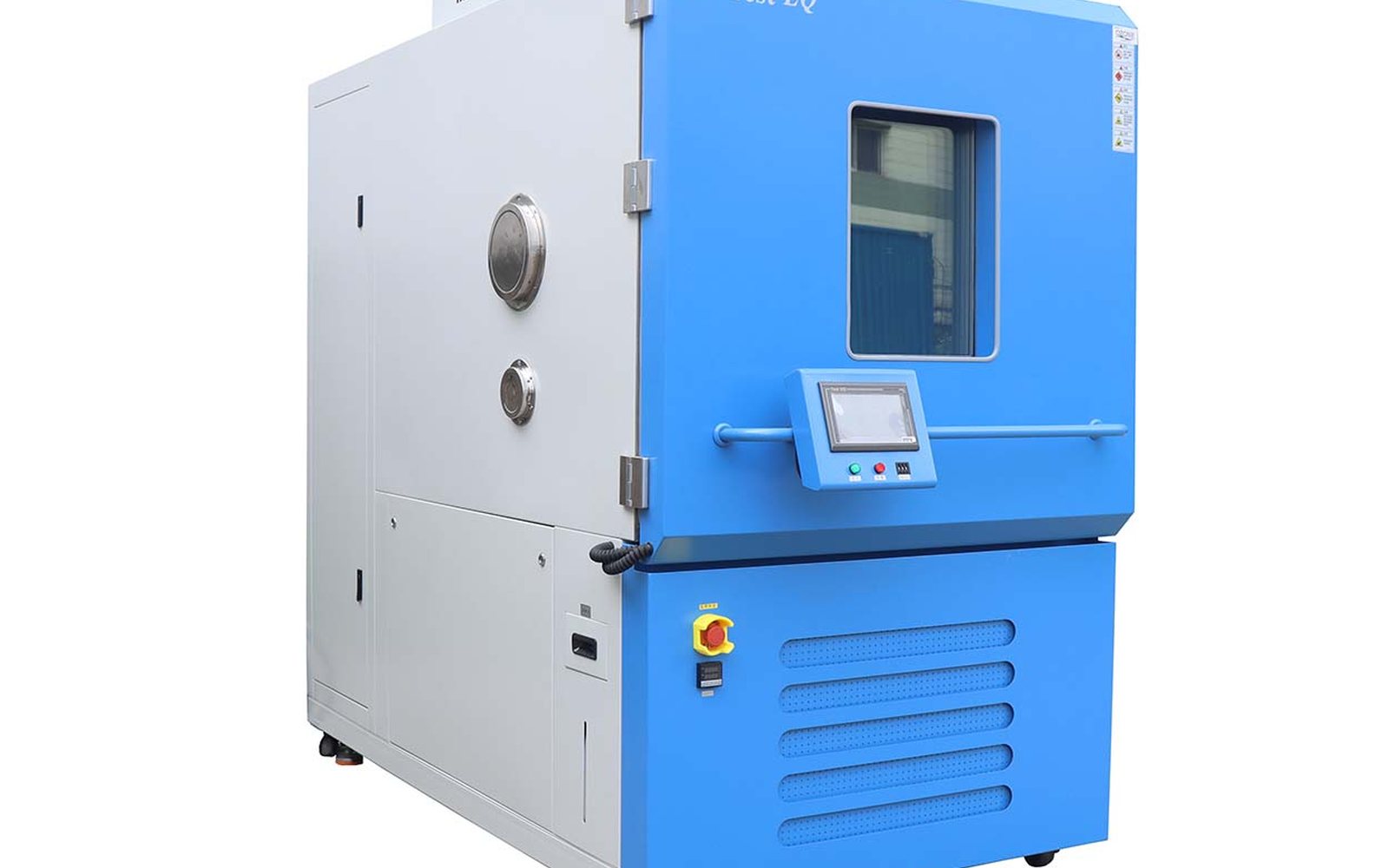
Humidity testing
For the humidity test the module or panel goes through 10 humidity-freeze cycles. Three samples are placed in the test chamber, installed so that the surrounding air circulates and arranged so that condensation cannot drip onto the sample. Each cycle consists of:
- A transition in chamber temperature from 25 °C ±2 °C to 85 °C ±2 °C
- A dwell at 85 °C ±2 °C for 20 h minimum
- A transition from 85 °C ±2 °C to −40 °C ±2 °C
- A dwell at −40 °C ±2 °C for 30 minutes minimum
- A transition from −40 °C to 25 °C
Transition limits apply. When the temperature is 5 °C or higher, the chamber temperature changes no faster than 120 °C/h with respect to time; when it is below 5 °C, no faster than 200 °C/h. The total time of the transition and the −40 °C dwell together does not exceed 4 hours, and the total cycle time does not exceed 24 hours. If a temperature of 25 °C is the beginning or end of the 10 cycles, any nominal room temperature in the range 15 °C to 30 °C may be used. All temperatures measured on the module surface have to be within ±2 °C.
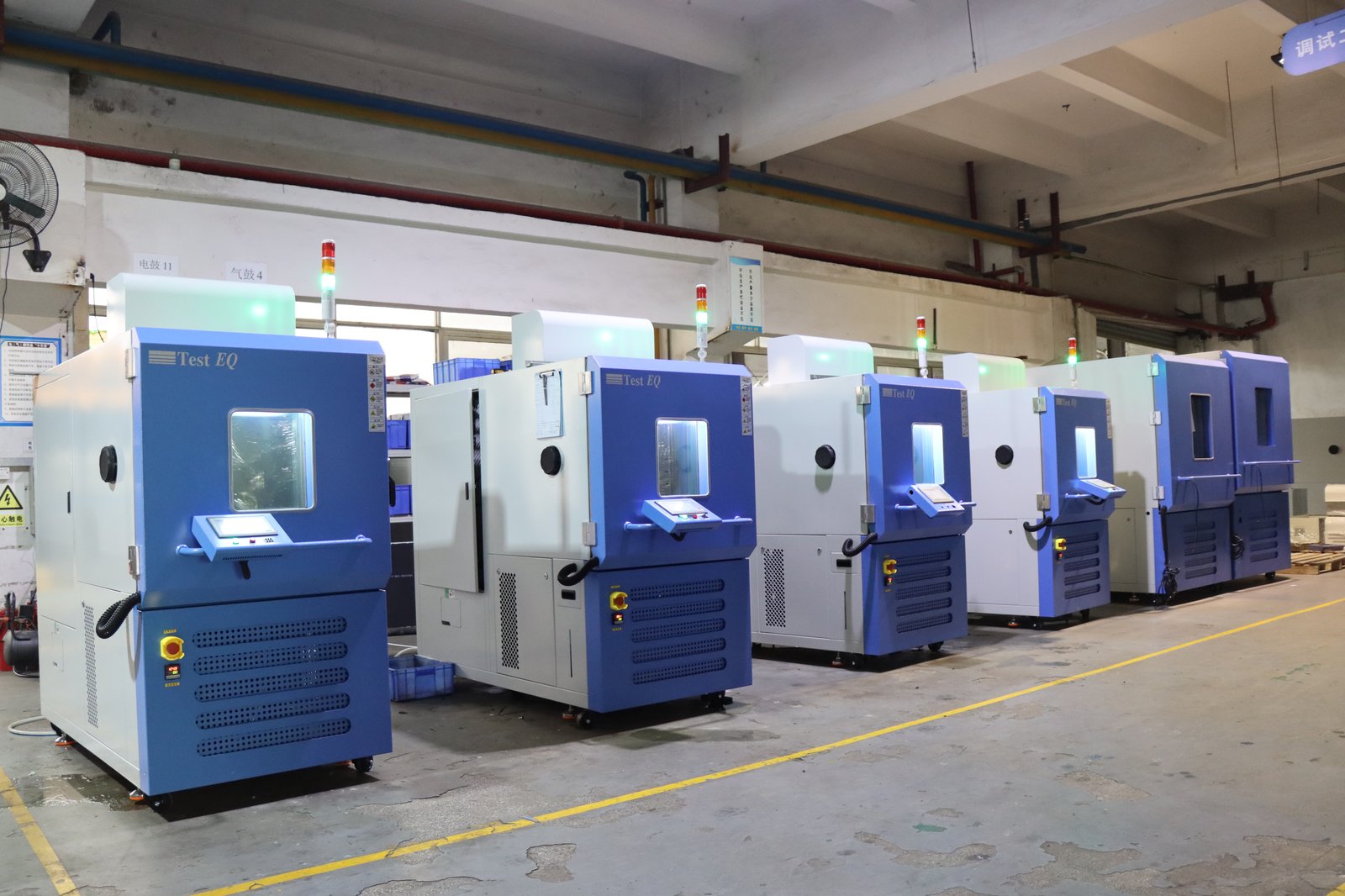
Thermal shock testing
In the thermal shock test the module or panel is subjected to 200 temperature cycles. Three components or panel samples are placed in an air-circulation chamber where temperature and humidity can be adjusted as needed; humidity is adjusted only when necessary to prevent moisture build-up on the sample surface. The sample is mounted or supported so that surrounding air circulates freely, and the mounting or support device has low thermal conductivity to thermally isolate the sample.
Which chamber
Both procedures require a chamber that holds a wide low-to-high temperature range with controlled transition rates and accurate temperature distribution:
- Humidity-freeze and wet-heat sequences → temperature humidity test chamber .
- Thermal shock, 200 cycles → thermal shock chamber or a rapid-cycling chamber rated to the transition limits above.
- Large panels that do not fit a cabinet → walk-in environmental chamber .
Contact us with the module or panel dimensions, the required cycle count and the temperature transition rate.
Frequently asked questions
How many humidity-freeze cycles does UL 1703 require, and how are the samples arranged?
The module or panel goes through 10 humidity-freeze cycles, with three samples placed in the test chamber. The samples are installed so that the surrounding air circulates and arranged so that condensation cannot drip onto them. All temperatures measured on the module surface have to be within ±2 °C.
What are the temperature steps inside one UL 1703 humidity-freeze cycle?
Each cycle runs a transition in chamber temperature from 25 °C ±2 °C to 85 °C ±2 °C, a dwell at 85 °C ±2 °C for 20 h minimum, a transition to −40 °C ±2 °C, a dwell there for 30 minutes minimum, and a transition back to 25 °C. If a temperature of 25 °C is the beginning or end of the 10 cycles, any nominal room temperature in the range 15 °C to 30 °C may be used.
What transition rate limits apply in the UL 1703 humidity-freeze test?
When the temperature is 5 °C or higher, the chamber temperature changes no faster than 120 °C/h with respect to time; when it is below 5 °C, no faster than 200 °C/h. The total time of the transition and the −40 °C dwell together does not exceed 4 hours, and the total cycle time does not exceed 24 hours.
How many cycles does the UL 1703 thermal shock test use?
The thermal shock test subjects the module or panel to 200 temperature cycles, with three components or panel samples placed in an air-circulation chamber where temperature and humidity can be adjusted as needed. Humidity is adjusted only when necessary to prevent moisture build-up on the sample surface. The sample is mounted or supported so that surrounding air circulates freely, and the mounting or support device has low thermal conductivity to thermally isolate the sample.
Which chamber is used for UL 1703 humidity-freeze testing and which for thermal shock?
Humidity-freeze and wet-heat sequences are run in a temperature humidity test chamber. The thermal shock procedure at 200 cycles uses a thermal shock chamber or a rapid-cycling chamber rated to the transition limits of 120 °C/h above 5 °C and 200 °C/h below it. Large panels that do not fit a cabinet use a walk-in environmental chamber.